"METROrhythmic Reflections" Exhibition by House Museum "Pancho Vladigerov" at the Ministry of Foreign Affairs
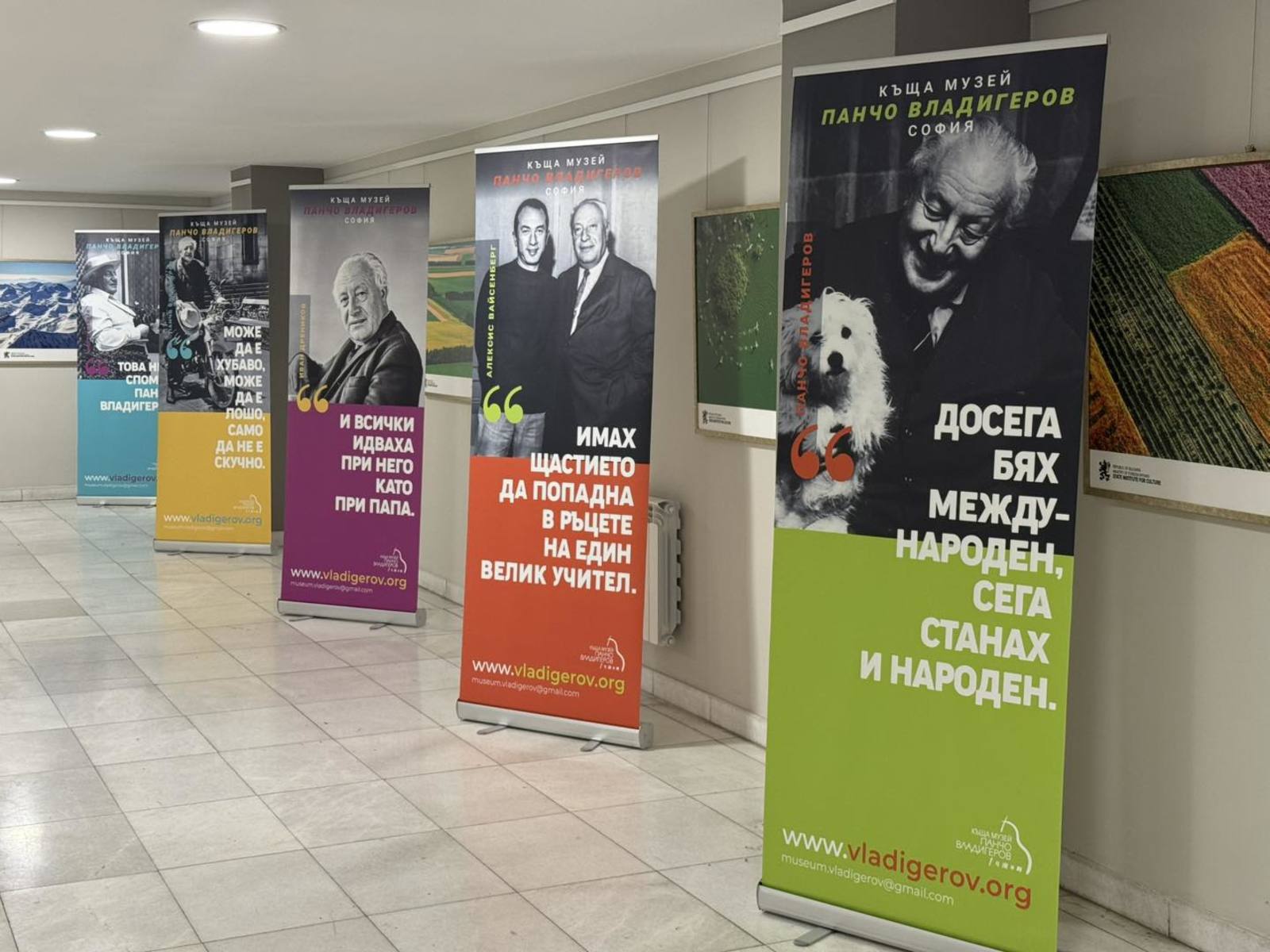
In 2025, the State Institute for Culture at the Ministry of Foreign Affairs signed a cooperation agreement with House Museum "Pancho Vladigerov". On this occasion, we present the exhibition "METROrhythmic Reflections", which is on display in the exhibition space of the Ministry of Foreign Affairs.
The exhibition “METROrhythmic Reflections” was created in 2024, the year marking 125 years since the birth of Pancho Vladigerov. The House Museum “Pancho Vladigerov” team wishes to present emblematic quotes spoken by – or about – the composer. In this, we recall the bright presence and unique sense of humour of Vladigerov, as well as his long-lasting impact and influence on Bulgarian musical culture.
This exhibition was created as one of the projects funded by the Ministry of Culture on the occasion of the 125th anniversary of Vladigerov’s birth, in partnership with Sofia Municipality. It was first shown in the period 4th – 17th March 2024 in the Sofia metro system and inspired by the musical game bearing the same name. The five panels became part of the metro network and were seen by over 500,000 people, users of key metro lines across the capital. Some of them partook in the game “METROrhythmic Reflections” by scanning QR codes from the boards which lead to additional information about events and works by Vladigerov, available on our museum website: https://vladigerov.org/.
In 1946, by decree No. 2 of the Presidium of the National Assembly of the People's Republic of Bulgaria, Pancho Vladigerov was awarded the title of “People's Artist”. Vladigerov's music was, at the time, already present across Europe’s largest musical stages, and as early as 1925, the Rhapsody “Vardar” was performed at Carnegie Hall, New York. After being awarded the state title, the composer jokingly stated: “So far I was international, now I have become national!”
When asked about his first teacher Vladigerov, world-famous pianist Alexis Weissenberg has always testified with deep respect and affection, as evident by his words: “The basis of my playing, one might say, is “Vladigerovian”. Pancho Vladigerov is my teacher, to whom I owe everything – please make sure to write all of this down…” – the pianist’s words to journalists.
“Yakubitsa House” has always been a centre of attraction for all prominent musicians and artists of the 20th century who visit Bulgaria for concerts, events and other public appearances. It was with regard to the frequent visits to Vladigerov’s home that one of his most prominent students, pianist Ivan Drenikov, once exclaimed: "He was like a pope! ...When a "great" musician came, he had to visit Vladigerov!"
A popular anecdote tells how once, while riding his moped near the "Bulgaria" Concert Hall, Vladigerov was hit by another motorcyclist. The young policeman who came by asked him what brand and colour the motorcycle that hit him was, what its license plate number was, how the motorcyclist was dressed... but Vladigerov could not remember anything. "How will we find him and punish him then?" – the policeman wondered, when Vladigerov replied: “I remember now! His horn was in A flat, that’s how you’ll find him!…” The composer’s moped, a Puch 250 TF 1952 250cc 2 cyl ts BMW model, can be seen at the Pancho Vladigerov House Museum in Sofia.
Photography was Vladigerov’s favourite hobby. Over the years, Vladigerov has collected an impressive collection of photos, including autographed photos of people with whom he had close and professional relationships. It too is open to the public at the House Museum in Sofia.
The exhibition will be on display until 17th March 2026.